

Copper Tube Condenser: Structure and Principles
A copper tube condenser is a heat exchange device that utilizes copper tubes as the primary heat-transfer elements. It is widely employed in air-conditioning and refrigeration systems, where its core function is to cool and condense high-temperature, high-pressure gaseous refrigerant into a liquid state. Below is a detailed explanation of its structure and operating principles.
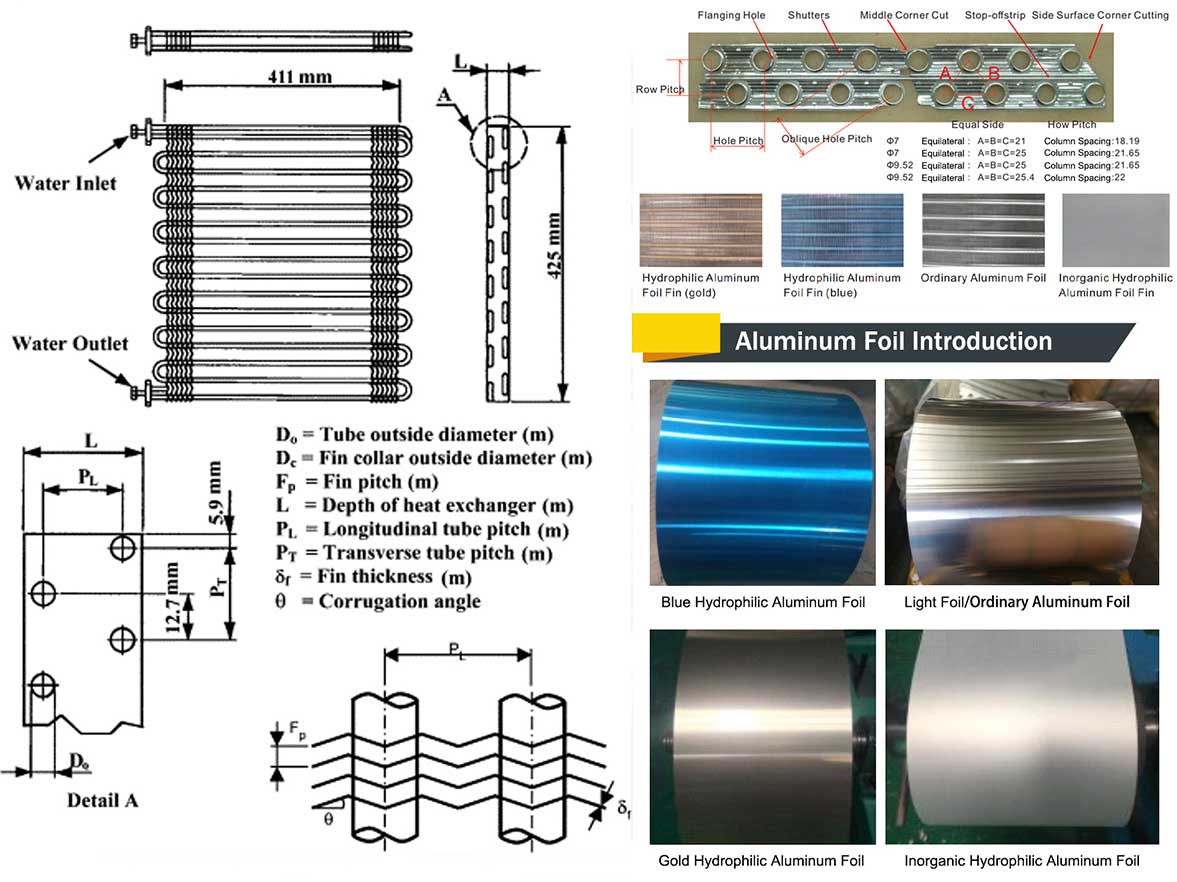
Basic Structural Components
Copper Tubes: These serve as the flow path for the refrigerant. Typical diameters range from 5–6 mm (in residential air conditioners) to 19–25 mm (in industrial shell‑and‑tube designs). Copper is chosen for its excellent thermal conductivity, corrosion resistance, and long service life.
Fins (Heat Sinks): Usually made of aluminum, these are tightly bonded to the outer surface of the copper tubes. Mechanical or hydraulic expansion processes are used to ensure close thermal contact, significantly increasing the effective heat dissipation area.
Tube Bundle Arrangement: Tubes can be arranged in either inline or staggered patterns. Staggered layouts offer higher heat transfer efficiency, though they incur slightly greater airside pressure drop.
Casing/Frame: This provides structural support. In air‑cooled condensers, fans are often incorporated to force air convection.
Sealing Structure: In shell‑and‑tube condensers, tube sheets are secured by a combination of expansion and welding to ensure a leak‑tight seal, preventing refrigerant escape.
Working Principle
High‑temperature, high‑pressure gaseous refrigerant exits the compressor and enters the copper tubes.
Inside the tubes, the refrigerant releases sensible heat (temperature drop) and latent heat (phase‑change heat) as it progressively condenses into a liquid.
Heat is conducted through the copper tube walls to the aluminum fins, where it is then carried away by natural air convection or forced airflow from fans.
In evaporative condensers, water spray evaporation further enhances the condensation effect by absorbing additional heat.
Key Advantages
High Thermal Conductivity: Copper’s thermal conductivity (~400 W/m·K) boosts overall heat exchange efficiency.
Corrosion Resistance: Particularly beneficial in humid environments, contributing to extended equipment lifespan.
Compact Design: Combined with finned surfaces, copper tube condensers achieve efficient heat transfer within a limited footprint.