
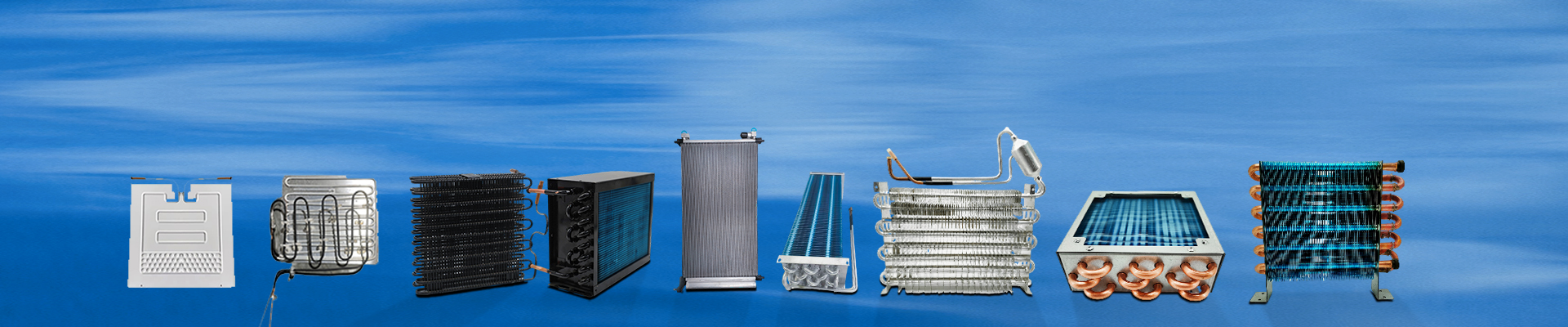
A copper tube aluminum fin evaporator coil is one of the most widely used heat exchangers in refrigeration and HVAC systems. It is designed to absorb heat from the surrounding air and transfer that heat to the refrigerant inside the copper tubes.
The combination of copper tubes and aluminum fins provides an effective balance of thermal conductivity, durability, weight, and cost. Copper tube aluminum fin evaporator coils are commonly used in commercial refrigeration equipment, freezers, cold rooms, display cabinets, beverage coolers, air conditioning systems, and industrial cooling applications.
For refrigeration equipment manufacturers and distributors, choosing the right evaporator coil is important because the coil design directly affects cooling capacity, energy efficiency, airflow, and the overall performance of the refrigeration system.
What Is a Copper Tube Aluminum Fin Evaporator Coil?
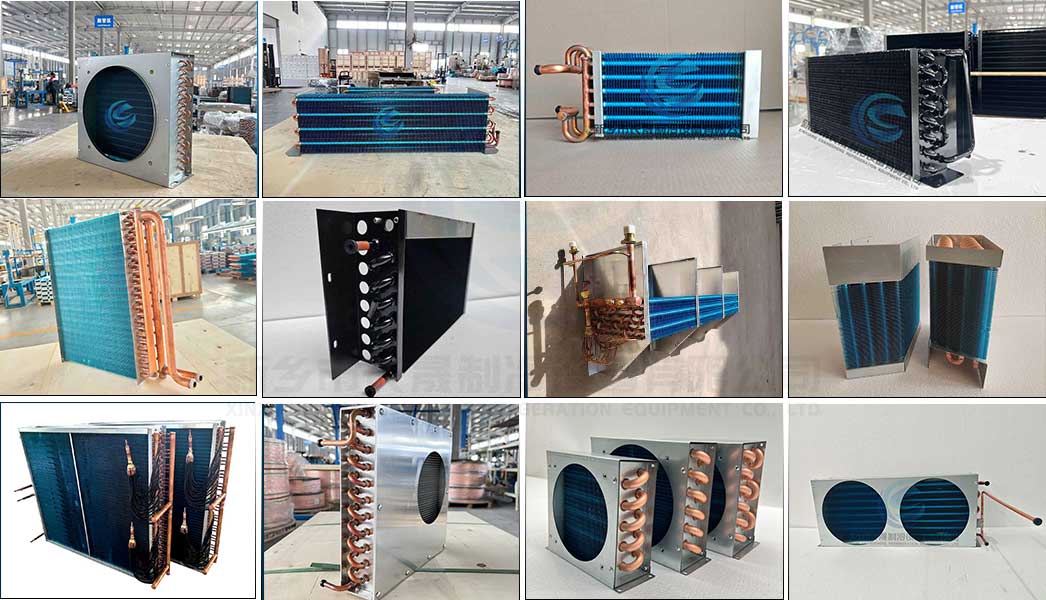
A copper tube aluminum fin evaporator coil consists mainly of copper tubes and aluminum fins. Refrigerant flows through the copper tubes while air passes across the aluminum fins.
During the refrigeration cycle, low-pressure refrigerant enters the evaporator and absorbs heat from the surrounding air. As the refrigerant evaporates inside the copper tubes, the air temperature decreases. The cooled air is then circulated through the refrigerated space.
The aluminum fins increase the external surface area of the coil, allowing more heat to be transferred between the air and the refrigerant.
For this reason, the copper tube aluminum fin structure is widely used where efficient air-to-refrigerant heat transfer is required.
How Does a Copper Tube Aluminum Fin Evaporator Work?
The working process can be simplified into four steps:
1. Refrigerant Enters the Evaporator
Low-temperature, low-pressure refrigerant enters the evaporator coil through the inlet connection.
2. Refrigerant Absorbs Heat
As warm air passes over the aluminum fins, heat is transferred from the air to the copper tubes. The refrigerant inside the tubes absorbs this heat and gradually evaporates.
3. Aluminum Fins Increase Heat Transfer
Because aluminum fins provide a much larger surface area than the tube alone, they improve contact between the coil and surrounding air.
4. Refrigerant Leaves the Coil
After absorbing sufficient heat, the refrigerant leaves the evaporator and continues through the refrigeration cycle.
The actual cooling capacity depends on several factors, including tube diameter, number of rows, fin spacing, coil dimensions, refrigerant type, airflow, entering air temperature, and evaporating temperature.
Why Use Copper Tubes and Aluminum Fins?
Copper and aluminum are commonly combined in evaporator coils because each material provides different advantages.
Copper tubes provide good thermal conductivity, corrosion resistance, mechanical strength, and reliable refrigerant flow.
Aluminum fins provide a large heat transfer surface while keeping the overall weight and material cost relatively low.
The combination creates a compact heat exchanger with an efficient air-side heat transfer area.
Key Factors When Choosing an Evaporator Coil
When selecting a copper tube aluminum fin evaporator coil, buyers should consider more than the physical dimensions.
1. Tube Diameter
Common tube diameters include different sizes depending on the refrigeration application and required capacity. The correct tube diameter should be selected according to refrigerant flow, pressure drop, circuit design, and cooling capacity.
2. Fin Spacing
Fin spacing has a significant effect on evaporator performance.
For applications where frost may accumulate, such as freezers and low-temperature refrigeration equipment, wider fin spacing is often preferred because it provides more space for frost accumulation and helps maintain airflow.
For higher-temperature applications, closer fin spacing can provide a larger heat transfer area within the same coil size.
3. Number of Rows
The number of tube rows affects the heat transfer area and pressure drop of the coil. More rows can increase heat transfer capacity, but the final design should be matched to airflow, refrigerant circuiting, and available installation space.
4. Coil Dimensions
The width, height, depth, and tube arrangement must fit the refrigeration equipment.
A custom evaporator coil can be designed according to the customer’s available installation space and required cooling capacity.
5. Refrigerant
The evaporator design must be compatible with the refrigerant used in the refrigeration system.
Depending on the application, different systems may use refrigerants such as R134a, R404A, R507, R290, R600a, or other refrigerants.
The working pressure, temperature range, tube material, circuit design, and safety requirements should be considered when selecting the coil.
Applications of Copper Tube Aluminum Fin Evaporator Coils
Copper tube aluminum fin evaporator coils are widely used in:
- Commercial refrigerators
- Commercial freezers
- Cold rooms
- Walk-in coolers
- Walk-in freezers
- Supermarket display cabinets
- Beverage coolers
- Refrigerated display cases
- Food storage equipment
- Ice-making equipment
- HVAC systems
- Industrial cooling equipment
For example, our Display Case Evaporator Coil is designed for supermarket refrigerators, beverage coolers, and commercial display freezers.
Copper Tube Aluminum Fin Evaporator Coil vs. Other Evaporator Types
Different refrigeration systems require different evaporator designs.
A copper tube aluminum fin evaporator coil is particularly suitable for air-cooling applications because the aluminum fins provide a large surface area for air-side heat transfer.
Other evaporator designs, such as roll bond evaporators, wire tube evaporators, or plate-type evaporators, may be more suitable for specific equipment and installation requirements.
The correct choice depends on cooling capacity, temperature range, refrigerant, available space, airflow, and manufacturing requirements.
How to Improve Evaporator Coil Performance
Proper coil design and maintenance are important for maintaining refrigeration efficiency.
The following factors should be considered:
- Keep the aluminum fins clean.
- Maintain adequate airflow across the coil.
- Select suitable fin spacing for the operating temperature.
- Use the correct refrigerant and operating conditions.
- Avoid excessive frost accumulation.
- Ensure proper refrigerant distribution between circuits.
- Select the correct tube diameter and circuit configuration.
- Regularly inspect the coil for corrosion or physical damage.
Regular cleaning is especially important because dust and dirt on the fins can restrict airflow and reduce heat transfer performance. For more information, see our guide on How to Clean a Copper Tube Aluminum Fin Evaporator.
Custom Copper Tube Aluminum Fin Evaporator Coil
Different refrigeration equipment requires different coil dimensions and performance characteristics. For this reason, OEM and custom evaporator coils are commonly used by refrigeration equipment manufacturers.
A custom copper tube aluminum fin evaporator coil can be designed according to:
- Coil width and height
- Coil depth
- Copper tube diameter
- Tube spacing
- Fin spacing
- Number of tube rows
- Refrigerant circuit
- Fin type
- Tube arrangement
- Inlet and outlet positions
- Mounting configuration
Providing a drawing, sample, or detailed technical specification can help the manufacturer determine the appropriate coil structure and provide a more accurate quotation.
Why Choose a Professional Evaporator Coil Manufacturer?
The performance of an evaporator depends not only on the materials but also on tube expansion, fin forming, circuit design, welding, leak testing, and final inspection.
A professional manufacturer can optimize the coil according to the refrigeration system rather than simply producing a coil based on external dimensions.
Xinxiang Changsheng Refrigeration Equipment Co., Ltd. specializes in the production of refrigeration evaporators and condensers, providing customized solutions for refrigerators, freezers, commercial refrigeration equipment, and other cooling applications.
Customers can provide drawings, samples, dimensions, or technical requirements for customized evaporator coil production.
Frequently Asked Questions
What is a copper tube aluminum fin evaporator coil?
It is a heat exchanger made from copper tubes and aluminum fins. Refrigerant flows through the copper tubes while the aluminum fins increase the surface area available for heat transfer between the refrigerant and surrounding air.
What is the advantage of copper tube aluminum fin evaporators?
The combination of copper tubes and aluminum fins provides good thermal performance, a large heat transfer area, relatively low weight, and a compact structure.
Can copper tube aluminum fin evaporator coils be customized?
Yes. Coil dimensions, tube diameter, fin spacing, tube arrangement, number of rows, circuit configuration, and connection positions can be customized according to the application and customer requirements.
What applications use these evaporator coils?
They are commonly used in commercial refrigerators, freezers, cold rooms, display cabinets, beverage coolers, HVAC equipment, and industrial refrigeration systems.
How does fin spacing affect evaporator performance?
Fin spacing affects heat transfer area, airflow, and frost accumulation. Wider spacing is generally useful for low-temperature applications where frost accumulation is a concern, while closer spacing can provide a larger heat transfer area in suitable higher-temperature applications.
Conclusion
The copper tube aluminum fin evaporator coil remains an important heat exchanger solution for refrigeration and HVAC applications. Its combination of copper tubes, aluminum fins, flexible circuit design, and customizable dimensions makes it suitable for a wide range of cooling equipment.
When selecting an evaporator coil, buyers should consider the refrigeration capacity, refrigerant, operating temperature, airflow, fin spacing, tube diameter, coil dimensions, and installation requirements.
For OEM refrigeration equipment manufacturers, a custom evaporator coil can provide a better match between the heat exchanger and the complete refrigeration system.