
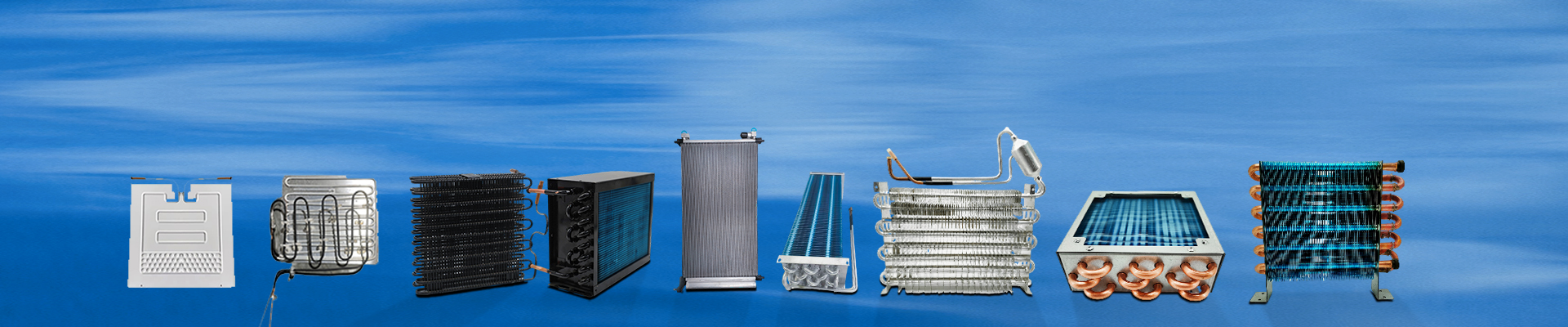
What Is an Inner Grooved Copper Tube
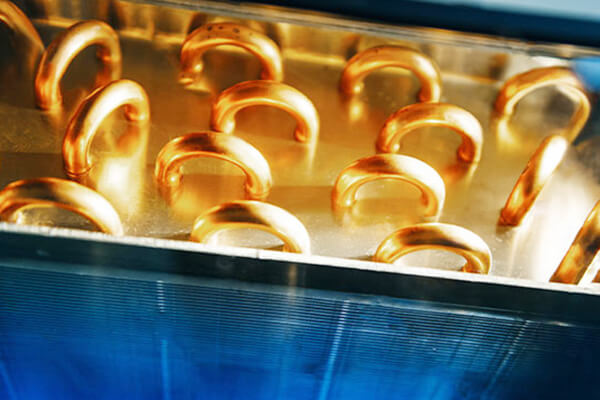
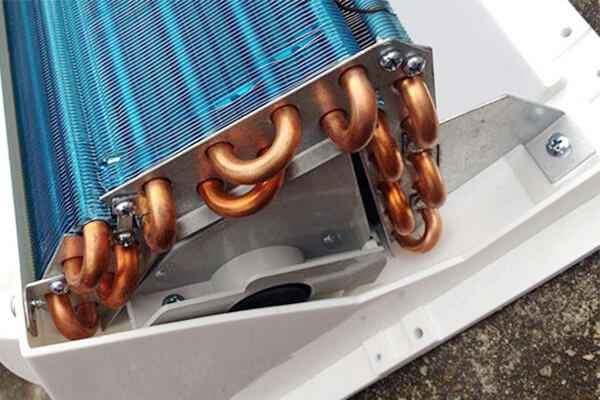
The purpose of using inner grooved copper tubes is to improve the energy efficiency ratio (EER) of air conditioners or heat exchangers, thereby achieving energy-saving performance.
The most effective solution is to enhance the heat transfer performance of air conditioner heat exchangers, including both evaporators and condensers.
In air conditioners, refrigeration units, and other cooling equipment, the most effective technical approach to controlling raw material cost of heat exchanger coils is the research and application of enhanced heat transfer technology.
This is typically achieved by:
Increasing heat transfer per unit area
Controlling the volume of the heat exchanger
Improving the overall heat transfer coefficient
This is the reason why inner grooved copper tubes were developed.
Relationship Between Copper Tube Diameter and Heat Transfer Efficiency
Selection of Inner Grooved Copper Tube Diameter
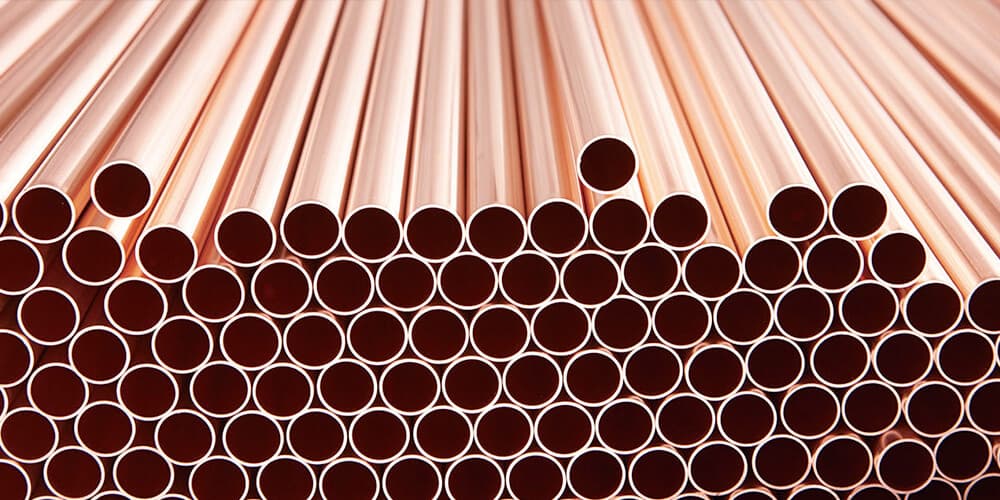
The heat transfer efficiency of a heat exchanger and the cost-performance ratio of an air conditioner are highly related to:
The diameter of the inner grooved copper tube
The geometric shape of the internal grooves
In early heat exchanger designs, the copper tube diameter was approximately φ9.52 mm, which was later reduced to φ7.0 mm.
With smaller-diameter tubes:
The spacing between tubes is reduced
Fin efficiency is improved
The effective heat transfer area is increased
As a result:
Airflow resistance through the heat exchanger is reduced
Overall heat transfer performance is significantly improved
The performance of evaporator coils and condenser coils is enhanced
Structure and Heat Transfer Performance of Inner Grooved Copper Tubes
Internal Structure of Inner Grooved Copper Tubes
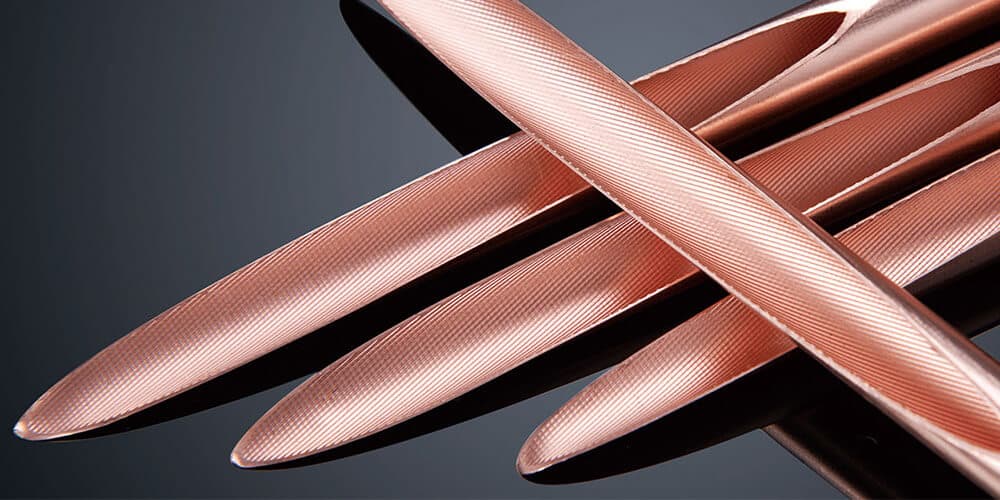
Inner grooved copper tubes can be classified into:
Conventional inner grooved copper tubes
Non-conventional inner grooved copper tubes
Common conventional types include:
Trapezoidal inner grooved copper tubes
M-type inner grooved copper tubes
Non-conventional groove types mainly refer to:
Cross-grooved inner copper tubes
In general, cross-grooved copper tubes provide higher heat transfer efficiency than single-helix trapezoidal grooved tubes, especially when mixed refrigerants are used.
Different refrigeration systems have different requirements for the structure of inner grooved copper tubes.
Below is a discussion of the relationship between inner groove structures and refrigerants.
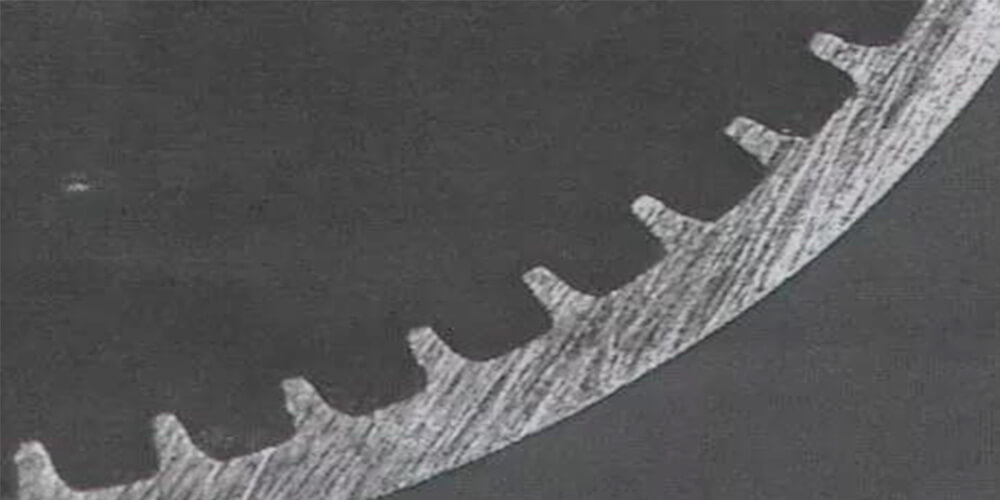
Trapezoidal Inner Grooved Copper Tube
As shown, trapezoidal inner grooved copper tubes significantly enhance heat transfer performance.
When used with R410A refrigerant:
Condenser heat transfer coefficient is 1.5 times that of standard inner grooved tubes
Evaporator heat transfer coefficient is 1.4 times higher
When used with R407C refrigerant:
Condenser heat transfer coefficient is 1.3 times higher
Evaporator heat transfer coefficient is 1.3 times higher
This enhanced performance is mainly due to:
Small apex angle of the trapezoidal grooves
Thin groove tips
Larger groove bottom width
During condensation, the refrigerant liquid film at the groove bottom becomes thinner, effectively reducing thermal resistance.
These tubes are commonly used in high-pressure refrigeration systems, such as:
Condensing units
Evaporators and condensers
Bitzer condensing units
Outdoor condensing units
Air-cooled condensers
Cooling coils
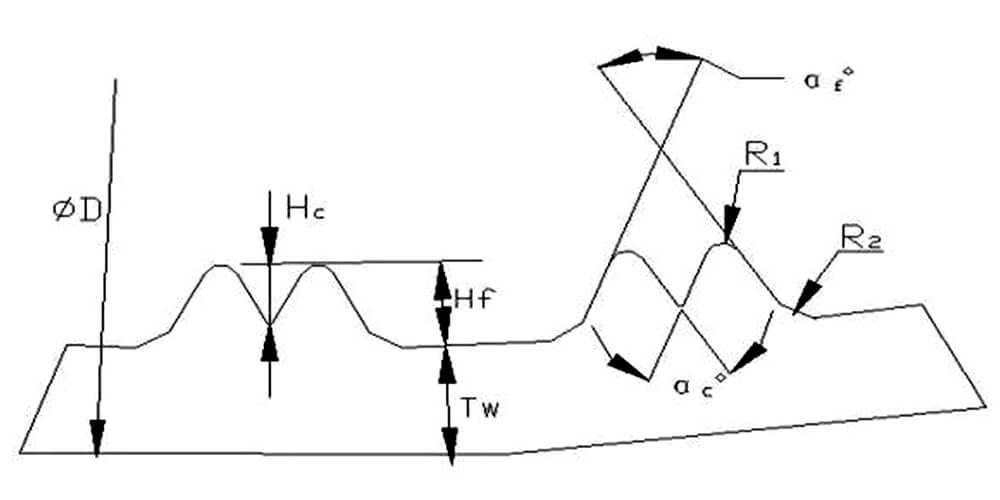
M-Type Inner Grooved Copper Tube
Multiple grooves create more evaporation nucleation sites, but excessive rib height can reduce fin efficiency and increase flow resistance.
To address this issue, M-type inner grooved copper tubes were developed by adding small grooves on trapezoidal ribs.
Experimental results show:
Under low mass flow rates, M-type tubes exhibit a significant increase in condensation heat transfer coefficient
Wider groove bottoms facilitate refrigerant drainage
Liquid film thickness is reduced
System-level testing shows:
Cooling capacity increases by 70–80 W under identical conditions
Heating capacity in heat pump systems increases by approximately 100 W
Composite Inner Grooved Copper Tube
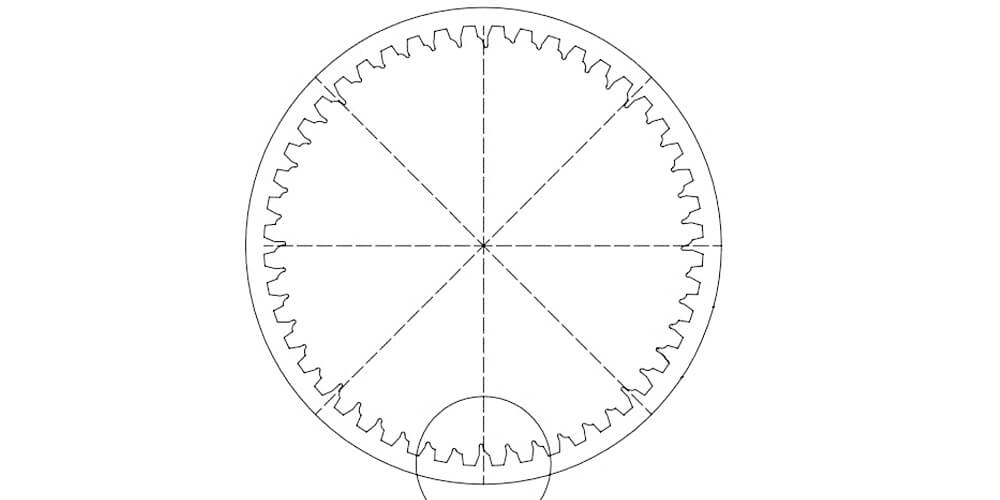
Composite inner grooved copper tubes are most suitable for R407C refrigerant.
R407C is a non-azeotropic mixture of three refrigerants, which tends to stratify when flowing through conventional single-groove tubes or smooth tubes.
In composite inner grooved copper tubes:
Turbulence is generated in two directions
Refrigerant components are thoroughly mixed
Gas-liquid phase change is enhanced
This internal structure effectively eliminates heat transfer degradation caused by refrigerant stratification.
Although cross-grooved tubes can also improve mixing, they result in higher pressure drop losses.
Therefore, V-type inner grooved copper tubes are recommended for R407C refrigerant systems.
。
✓ 交叉内螺纹铜管
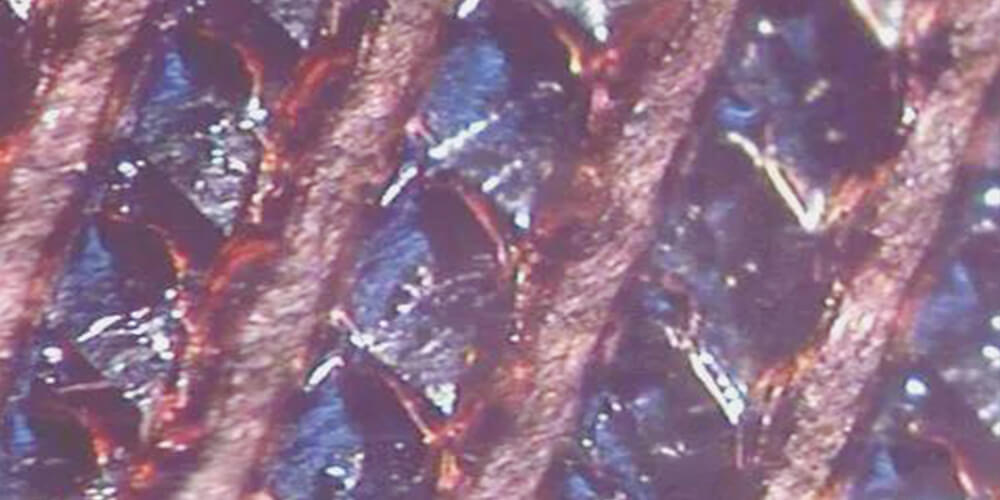
Cross-Grooved Inner Copper Tube
Features of Cross-Grooved Copper Tubes
Increases liquid superheat and internal heat transfer area
Creates more evaporation nucleation sites
Enhances turbulence
Suitable for evaporator tubes
Ideal for R410A refrigeration systems
These systems typically operate at higher flow velocities to offset the pressure drop associated with cross-groove structures, while fully utilizing the large internal surface area.
As a result, cross-grooved copper tube heat exchangers are particularly suitable for R410A refrigerant units and compressors.
Limitations in the Application of Inner Grooved Copper Tubes

Although V-grooved and cross-grooved copper tubes outperform conventional single-helix trapezoidal grooved tubes, their application is limited due to:
Higher material requirements
More complex manufacturing processes
Higher production costs
As a result, these tubes have not yet been widely adopted on a large scale.
Different types of inner grooved copper tubes vary significantly in groove geometry and structural combinations.
Therefore, when designing groove profiles and geometric parameters, the impact of different inner groove structures on heat transfer performance must be considered first.