
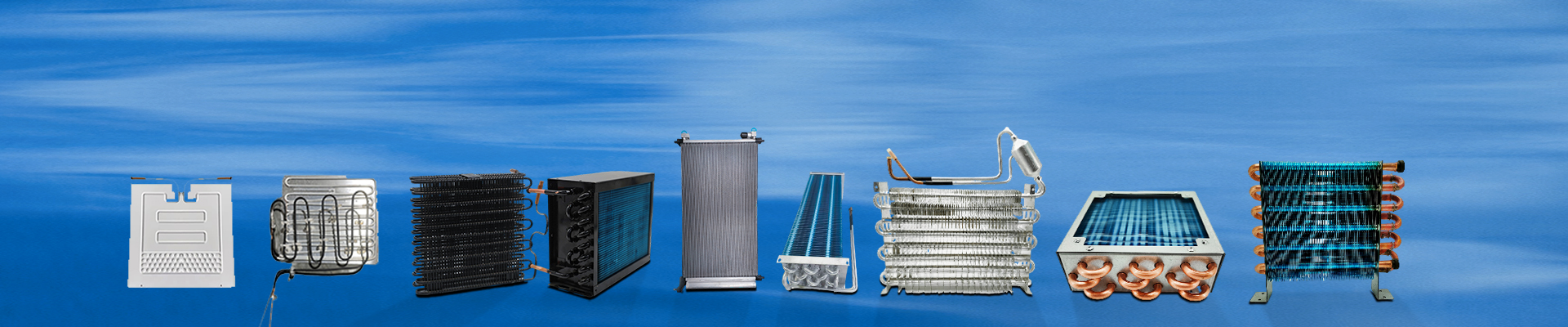
1. Overview of Main Condenser Types
In cold storage refrigeration systems, the condenser functions much like the human body’s sweat glands, efficiently dissipating heat to ensure stable system operation. At present, there are five commonly used condenser types in cold storage applications:
Air-Cooled Condenser
Heat is dissipated through forced airflow generated by fans. This type is suitable for regions with limited water resources. It features simple installation and low maintenance, though operating noise is relatively higher.
Water-Cooled Condenser
Uses circulating cooling water for heat exchange, offering approximately 30% higher efficiency than air-cooled condensers. A water treatment system is required to prevent scaling and corrosion.
Evaporative Condenser
Combines the principles of air cooling and water cooling. A sprayed water film enhances heat dissipation, reducing water consumption while delivering high efficiency. Proper scale prevention and water quality management are essential.
Plate Condenser
Features a compact design with a large heat transfer area, making it ideal for retrofit projects or installations with limited space.
Shell-and-Tube (Tube-in-Tube) Condenser
Adopts a concentric double-tube structure with excellent freeze resistance, performing reliably in low-temperature environments, particularly in northern regions.

2. Key Factors in Condenser Selection
Selecting a condenser is not a one-dimensional decision. It requires evaluation from three critical perspectives:
Environmental Compatibility
Air-cooled condensers are preferred in arid areas, water-cooled units suit locations with sufficient water supply, and shell-and-tube condensers are recommended for environments below –20°C.
Energy Efficiency Balance
Evaporative condensers involve higher initial investment but lower operating costs, while air-cooled condensers have lower upfront costs but higher long-term energy consumption. A 5-year total cost of ownership analysis is recommended.
Maintenance Requirements
Plate condensers are prone to fouling but easy to clean; water-cooled condensers require regular descaling; evaporative condensers need measures to prevent algae growth.
3. Emerging Technology Trends
The refrigeration industry is undergoing a green transformation, with two major innovation trends gaining attention:
Variable Frequency Integrated Systems
Intelligent speed control of compressors and condenser fans reduces energy consumption by 15%–20%, improving overall system efficiency.
Hybrid Condenser Designs
Dual-mode systems combining air cooling and water cooling allow flexible operation across different seasons, optimizing heat rejection performance.
Anti-Corrosion Coatings
Advanced nano-coating technologies significantly extend equipment service life, particularly in high-humidity environments such as seafood cold storage facilities.