
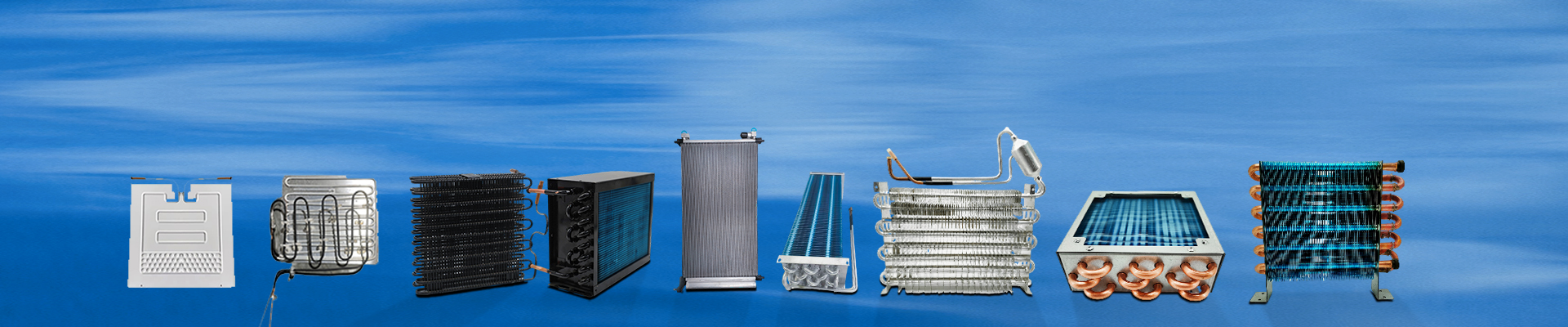
Fin-Type Condenser
A fin-type condenser is a heat exchange device widely used in refrigeration and air conditioning systems. Its primary function is to cool high-temperature, high-pressure gaseous refrigerant and condense it into a liquid state. By significantly increasing the heat transfer surface area, the fin-type condenser greatly improves heat exchange efficiency and serves as an indispensable component in the refrigeration cycle. Its core structure consists of copper or aluminum tubes combined with external metal fins, enabling heat dissipation through natural convection or forced airflow.

In practical applications, fin-type condensers are commonly used in residential air conditioners, commercial refrigeration equipment, industrial chillers, and automotive air conditioning systems. Their high heat dissipation capacity makes them particularly suitable for installations with limited space and demanding cooling requirements. For example, in split air conditioner outdoor units, fin-type condensers work together with axial fans to achieve rapid heat rejection within a compact structure, ensuring stable system operation. In addition, their modular design facilitates installation and maintenance, allowing adaptation to various operating conditions.
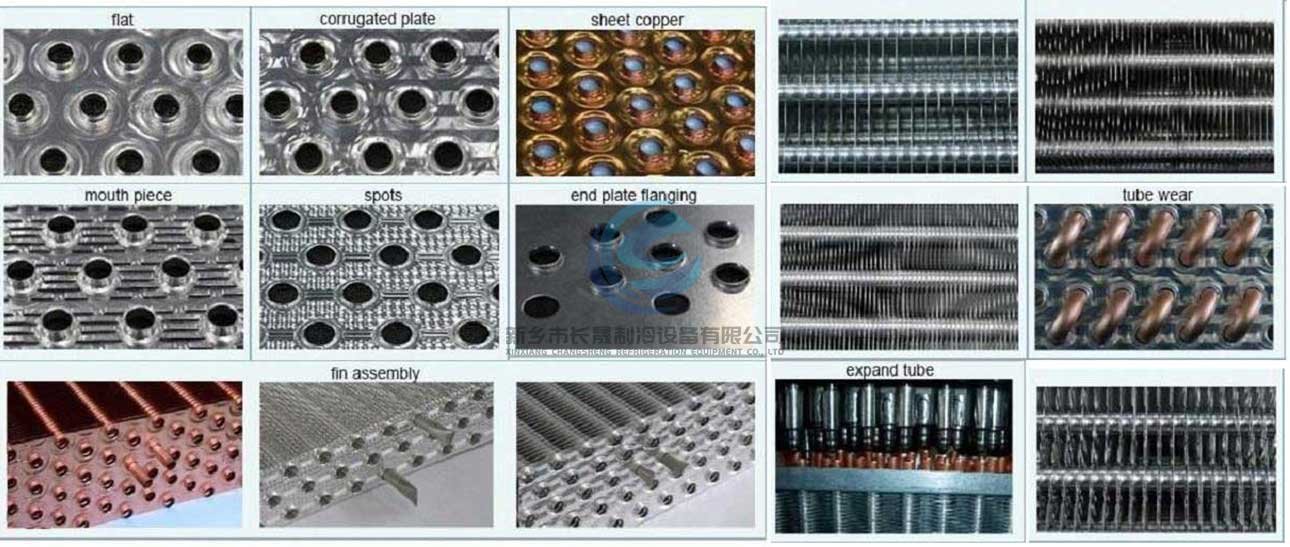
From a technical perspective, the performance of fin-type condensers is influenced by factors such as fin geometry, fin spacing, material selection, and tube arrangement. Common fin types include flat fins, corrugated fins, and louvered fins, with louvered fins being widely adopted due to their ability to disturb airflow and enhance heat transfer. To improve corrosion resistance in harsh environments, some high-end products utilize hydrophilic aluminum foil or anti-corrosion coatings to extend service life. In recent years, the integration of microchannel technology with fin structures has further enhanced heat transfer efficiency while reducing weight and material usage.
As energy efficiency standards become increasingly stringent, the design of fin-type condensers is evolving toward higher efficiency, greater compactness, and smarter configurations. By optimizing fin parameters and flow channel layouts, airflow resistance and pressure drop can be reduced, thereby improving the overall Energy Efficiency Ratio (EER) of the system. Furthermore, with the application of Computational Fluid Dynamics (CFD) simulation, manufacturers can more accurately predict thermal performance and achieve customized designs. The widespread adoption of environmentally friendly refrigerants also places higher demands on material compatibility and pressure resistance.
Looking ahead, driven by global energy-saving and emission-reduction initiatives, as well as the rapid growth of emerging sectors such as cold chain logistics and data centers, fin-type condensers will continue to evolve in terms of heat transfer performance and system integration. Advances in materials, manufacturing processes, and intelligent control technologies will further enhance reliability and environmental adaptability. As a core heat exchange component in refrigeration systems, fin-type condensers will continue to play a vital role in advancing industry technology and supporting sustainable development.